
The temporomandibular joint is the joint that connects your jaw to your skull. When this joint is injured or damaged, it can lead to a localized pain disorder called temporomandibular joint (TMJ) syndrome or temporomandibular disorder (TMD).
Normal Functions of the TMJ
The TMJ plays a critical role in essential daily functions involving coordinated muscle, joint, and neural control. Some of the functions that rely on a smooth-functioning TMJ are:
- Chewing
- Speaking
- Swallowing
- Yawning
- Facial Expressions
Causes of TMJ disorders include:
- Injury to the teeth or jaw
- misalignment of the teeth or jaw
- teeth grinding or clenching
- Poor posture
- Stress
- Arthritis or degenerative changes
- Trauma to the joint
Signs and symptoms of temporomandibular joint (TMJ) syndrome include:
| Jaw pain | Most common complaint; dull, aching pain in the TMJ or surrounding muscles. |
| Limited or altered jaw movement | Reduced range of motion; deviation or deflection during opening/closing. |
| Joint sounds | Clicking, popping, or crepitus with movement, often due to disc displacement. |
| Locking episodes | Sudden inability to open (closed lock) or close (open lock) the jaw. |
| Muscle tenderness | Palpable pain in the jaw area. |
| Ear symptoms | Fullness, tinnitus, or ear pain) without a presence of infection. |
| Headache | pain is often felt around the temples, back of the head, or forehead. |
| Neck pain or stiffness | Often co-exists with cervical spine dysfunction. |
Patients who experience these issues typically see their dentist or ear/nose/throat specialist first to rule out dental or ear problems.
Triangle Physiotherapy has physiotherapists and chiropractors with certification and advanced training in TMJ Disorders (CTMD).
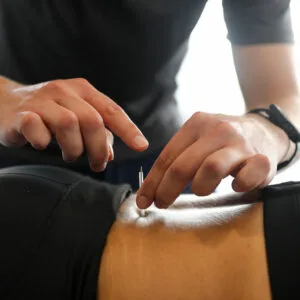
The physiotherapist would evaluate your posture, range of motion of your neck and TMJ, muscle tone and length and joint mobility in order to determine the best course of action. Treatment may include the following:
- Education
- Soft Tissue Techniques
- Modalities (as needed)
- Postural Strategies
- Stress Management
- FIMS (Functional IMS)
- Joint mobilizations
- Muscle Energy Techniques
If you are experiencing these symptoms, contact Triangle Physiotherapy today!