

The ulnar nerve runs from your neck, through your shoulder and elbow, and down into your hand. It’s responsible for sensation in your ring and pinky fingers and plays a key role in fine motor control.
When the nerve becomes compressed-especially around the elbow (in the cubital tunnel)-you may experience:
- Tingling or numbness in the ring and pinky fingers
- Weak grip strength
- Clumsiness when handling small objects
- Elbow pain that worsens when the arm is bent
This condition is called ulnar nerve entrapment, and it’s more common than you might think-especially in athletes, desk workers, and people with repetitive arm motions.
How Ulnar Nerve Therapy Helps
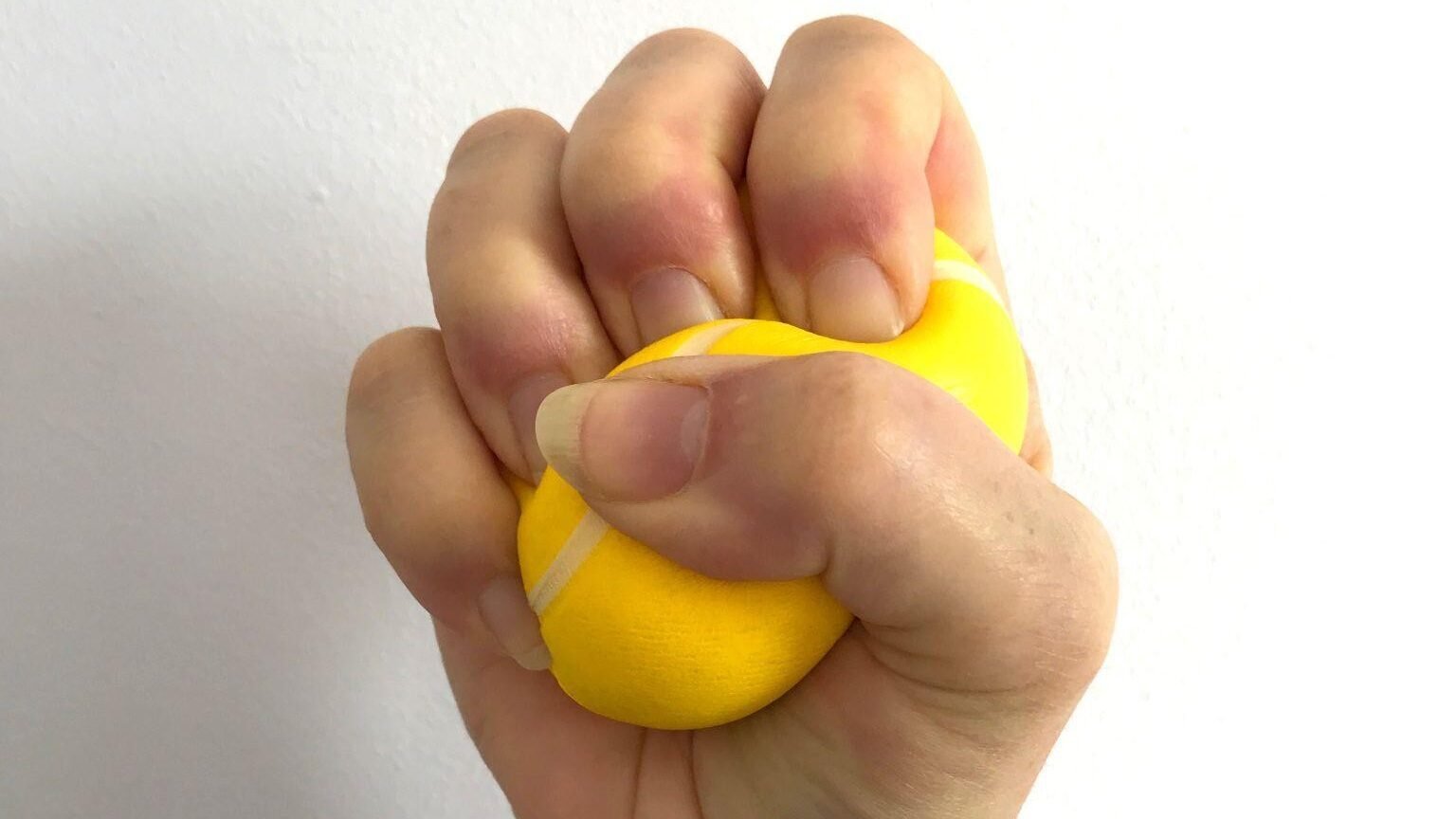
If you’re dealing with symptoms, don’t wait for them to go away on their own. At Triangle Physiotherapy, our team offers targeted, evidence-based ulnar nerve therapy to reduce pressure, improve mobility, and prevent long-term damage.
Here’s what your recovery journey might look like:
1. Assessment & Diagnosis
Your physiotherapist will evaluate your symptoms, movement patterns, posture, and arm function to pinpoint where the nerve is being compressed. This helps rule out other conditions like cervical spine issues or carpal tunnel syndrome.
2. Pain Relief & Protection
In the early stages, we focus on reducing inflammation and minimizing irritation:
- Activity modification (especially avoiding prolonged elbow flexion)
- Ergonomic advice for work and sleep positions
- Gentle modalities to calm irritated tissue
3. Ulnar Nerve Glides
One of the most powerful tools in your recovery toolbox? Ulnar nerve glides.
These are gentle, controlled movements that “floss” the nerve through its pathway-freeing it from areas of compression and restoring its mobility. You’ll learn how to perform them safely and effectively as part of your rehab program.
Bonus: These glides also improve circulation to the nerve, which can accelerate healing and reduce symptoms.
4. Strengthening & Mobility Work
As symptoms improve, your therapist will guide you through a tailored strengthening program to stabilize your shoulder, elbow, and wrist. This may include:
- Grip strengthening
- Postural retraining
- Core and scapular stabilization
- Stretching tight structures that may be contributing to compression
5. Return to Sport or Daily Activity
Whether you’re swinging a tennis racket, lifting weights, or typing for hours a day, we’ll help you safely return to your routine with confidence. We focus on:
- Rebuilding endurance
- Optimizing technique
- Preventing re-irritation
Where to Find Expert Ulnar Nerve Therapy in the GTA
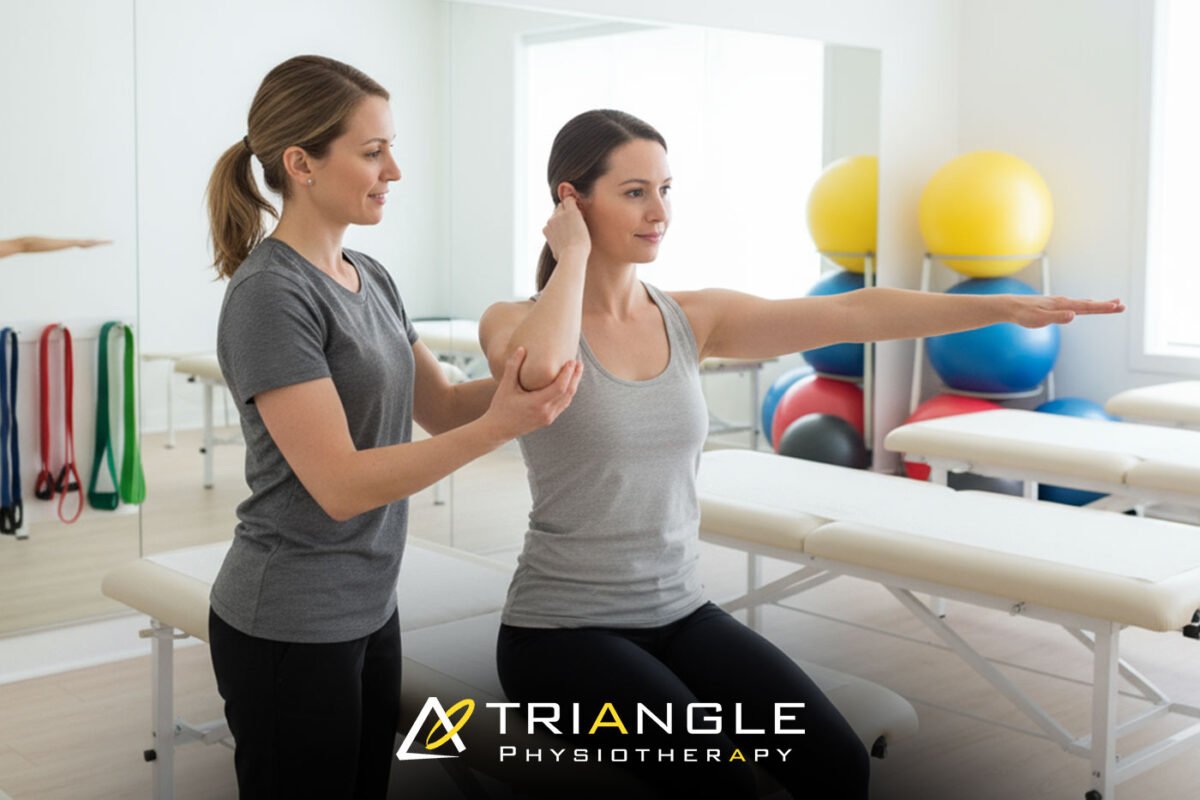
Looking for physiotherapy in North York, Oakville, or Etobicoke? Triangle Physiotherapy has you covered.
Our experienced team offers hands-on treatment and personalized care to address ulnar nerve entrapment and get you back to doing what you love-pain-free and stronger than before.
How to Prevent Ulnar Nerve Issues Long-Term
- Avoid prolonged elbow flexion (especially during sleep)
- Keep good posture during desk work
- Strengthen your upper body to support your arms
- Perform ulnar nerve glides as recommended
- Listen to early signs-don’t ignore the tingling!
Ready to Take the Pressure Off?

You don’t have to live with tingling hands, weak grip, or elbow pain. Whether you’re an athlete, a weekend warrior, or a dedicated desk worker, ulnar nerve therapy can make a life-changing difference.
Book your appointment today at Triangle Physiotherapy-serving patients across Etobicoke, North York, Oakville, and the Greater Toronto Area.
Let’s get your nerves firing on all cylinders again-no numbness, no limits.

If you’ve ever felt a weird tingling, numbness, or weakness in your ring and pinky fingers – especially after a long day at your desk – you might be dealing with something called ulnar nerve entrapment.
This happens when the ulnar nerve, which runs from your neck down to your hand, gets compressed – usually around the elbow (think: leaning on your desk too much) or wrist. Over time, this can lead to discomfort, weakness, or even coordination issues in your hand.
The good news? You don’t need a gym or fancy equipment to get relief. These ulnar nerve entrapment exercises are quick, easy, and can be done right from your desk chair. At Triangle Physiotherapy (with clinics in Mississauga, Etobicoke, and North York), we recommend these as part of early treatment and prevention strategies.
1. Ulnar Nerve Glide (“The Waiter Stretch”)
This is one of the most effective exercises for gently mobilizing the ulnar nerve. Think of it like flossing for your nerve – helping it move more freely through tight spots.
How to do it:
- Sit up straight in your chair
- Bring one arm out to the side, palm up, as if holding a tray
- Slowly bend your elbow and bring your hand toward your face
- Then reverse the motion, extending the arm again
- Repeat 10 times per side
Tip: You should feel a gentle stretch or tingling – not pain. If it’s too intense, shorten the range of motion.
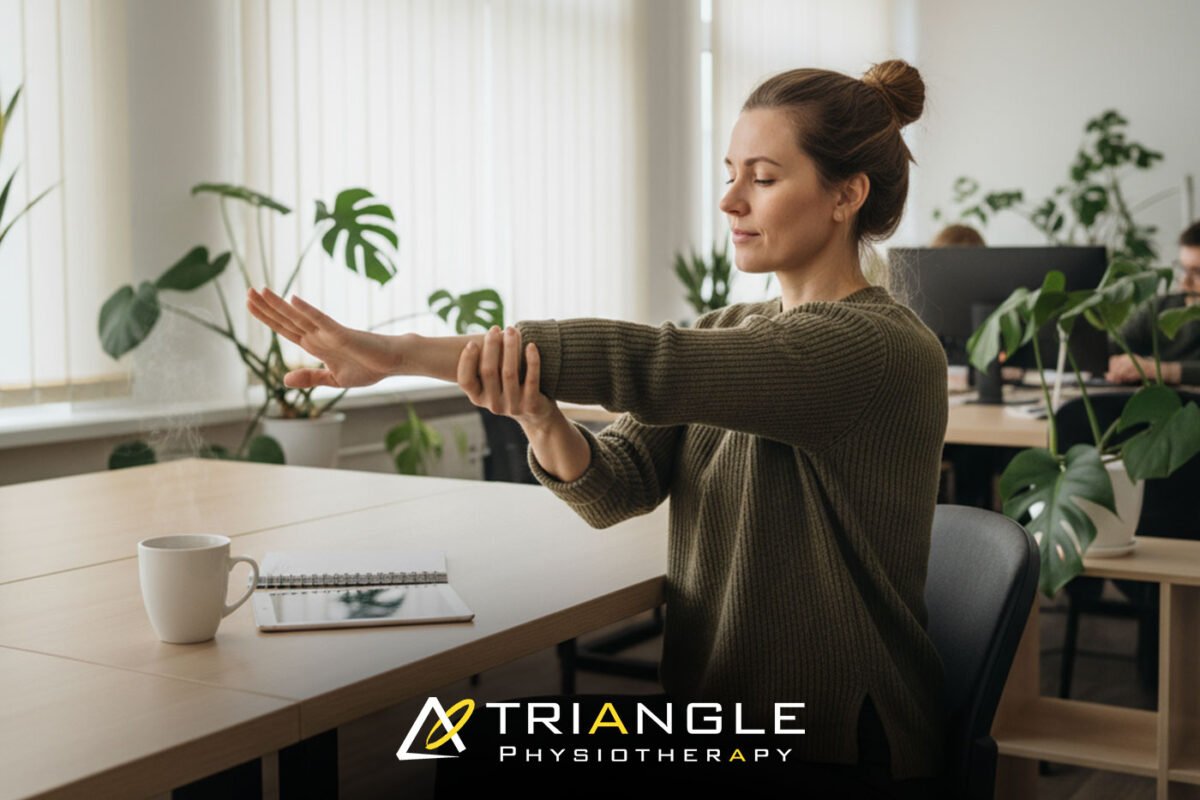
2. Elbow & Wrist Stretch
If your job involves typing or using a mouse all day, this combo stretch hits two major tight areas – your inner elbow and forearm.
How to do it:
- Extend your arm out in front of you, palm facing up
- Use your other hand to gently pull your fingers back toward the floor
- You’ll feel the stretch in your forearm and possibly your elbow
- Hold for 15-20 seconds, then switch sides
- Repeat 3-4 times per arm
Bonus: This also helps with general wrist and forearm tightness caused by desk work.
3. Desk Shoulder Rolls & Posture Reset
This may seem too simple, but it’s surprisingly effective. Poor posture can cause or worsen ulnar nerve issues by increasing pressure through the neck and shoulder area.
How to do it:
- Sit tall, feet flat, shoulders relaxed
- Slowly roll your shoulders backward in a circular motion 10 times
- Then, pull your shoulder blades together (like you’re pinching a pencil between them)
- Hold for 5 seconds, release, and repeat 10 times
Why it works: Better posture opens up the space where nerves travel, reducing compression at the source.
When to Seek Help
If symptoms continue, like persistent tingling, numbness, or weakness, don’t wait. Professional physiotherapy for ulnar nerve compression can make a world of difference. At Triangle Physiotherapy, our team in Mississauga, Etobicoke, North York and more creates personalized treatment plans combining manual therapy, nerve gliding, strengthening, and posture correction.
Take 5 Minutes for Your Nerves Today.
Your body (and your fingers) will thank you.
Book your appointment with us today at trianglephysiotherapy.com